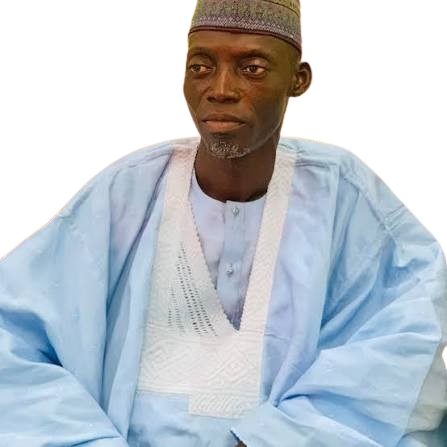
Sheikh Khalifa Muhammad Solihu Amosa Babaniji is a prominent Islamic religious leader who serves as the Grand Khaleepha (Khalifatul Kulafa’i) of the Qadiriyyah Movement in Lagos State, Nigeria. He holds an important position within the movement and is recognised for his spiritual leadership and dedication to Islamic values.
EARLY LIFE AND
HERITAGE
Sheikh Khalifa Muhammad Solihu Amosa Babaniji was born on Lagos Island, Lagos State, Nigeria, into a devoted Qadiriyyah family with a strong connection to Islamic teachings and traditions. His family heritage played an important role in shaping his religious background and connection to the Qadiriyyah Movement, one of the well-known Sufi orders within Islam. Growing up in an environment influenced by Islamic values and spirituality provided a foundation for his religious journey and understanding of the importance of faith, discipline, and devotion.
His early family background reflects a tradition of religious commitment and a deep appreciation for Islamic teachings. Being raised within a Qadiriyyah family connected him to the spiritual heritage and practices of the movement from an early stage in his life. This background forms an important part of understanding his identity and his later position as the Grand Khaleepha (Khalifatul Kulafa’i) of the Qadiriyyah Movement in Lagos State, Nigeria.
FAMILY LINEAGE AND HERITAGE
Sheikh Khalifa Muhammad Solihu Amosa Babaniji is the son and successor of the late Khaleepha Amosa, who passed away on May 14, 2013. His father played an important role in the family’s religious heritage and connection to the Qadiriyyah Movement. Beyond his religious background, the late Khaleepha Amosa worked as a railway technician, a profession that enabled him to travel extensively across Nigeria.
During his travels, he established connections with prominent Qadiriyyah leaders and Islamic scholars in different parts of the country. Among these respected figures was Sheikh Nasir Kabara of Kano, a notable leader associated with the Qadiriyyah tradition in Nigeria. These interactions helped strengthen his involvement in the movement and his relationships within the wider Qadiriyyah community.
Through his father’s religious connections and legacy, Sheikh Khalifa Muhammad Solihu Amosa Babaniji inherited a strong family association with the Qadiriyyah Movement. His succession following his father’s passing marked an important chapter in the continuation of the family’s religious heritage and leadership within the movement.
01
Entrust full-cycle implementation of your software product to our experienced BAs, UI/UX designers, developers.
For over three decades, Sheikh Khalifa Muhammad Solihu Amosa Babaniji has been actively involved in Qadiriyyah leadership and community affairs in Lagos State, Nigeria. Throughout his years of service, he has participated in various initiatives aimed at supporting the growth of the Qadiriyyah Movement and strengthening relationships within the wider Muslim community. His community involvement includes serving on fundraising boards, supporting youth development, and contributing to activities designed to promote unity and cooperation.
In addition to these responsibilities, he has been involved in efforts to resolve conflicts among different Islamic groups and community factions. Through dialogue, consultation, and engagement with various stakeholders, his work has focused on encouraging peaceful coexistence and mutual understanding. His involvement in these areas highlights the importance of community participation, religious cooperation, and the peaceful resolution of disagreements.
His continued engagement in Qadiriyyah leadership and community activities reflects a long-standing commitment to religious service and the well-being of the people around him.
ROLE AND LEADERSHIP IN QADRIYYAH
Turbaning & Title
He was installed as the Grand Khaleepha of Qadiriyyah in Lagos State (also recognized as Khalifatul Kulafa'i). His turbaning ceremony has featured prominent endorsements and participation from traditional and spiritual figures, including international and local Islamic scholars
Rotational Succession Context
The leadership of the Lagos Qadiriyyah traditionally follows a rotational framework among prominent houses (such as Sheikh Maalam Baba's house, Sheikh Salaty's house, and Sheikh Olohungbo's house). His selection and acceptance followed consultations and reconciliation efforts among these lineages.
Public Appearances
He frequently hosts and leads major spiritual gatherings in Lagos, such as the annual Mawlid Nabiyy celebrations and community peace initiatives.
// Drop us a line! We are here to answer your questions 24/7